Shared 12 Family Video Calls in 7 Days: The Simple Habit That Brought Us Closer Than Ever
Technology often feels like it pulls us apart, but I noticed something surprising—when we used video calls just a little more intentionally, my family started feeling closer. It wasn’t about fancy tools or long conversations. It was the small, shared moments: Grandma laughing at a toddler’s dance, my sister showing her garden bloom. This simple shift didn’t just connect us—it deepened our bonds in ways I never expected. And the best part? It didn’t take extra time, money, or tech skills. Just a tiny change in how we showed up for each other. If you’ve ever felt that ache of missing your people even when you’re just a call away, this is for you.
The Moment I Realized We Were Drifting
It was a quiet Sunday evening, the kind where the house settles into a soft hush after the weekend rush. I was sipping tea, scrolling through photos on my phone—old family pictures from holidays past. There was one of my niece blowing out birthday candles, another of my dad grilling in the backyard, and a blurry but joyful shot of all of us crammed around the dinner table last Thanksgiving. I smiled, but then something hit me: when was the last time I’d actually seen most of these people? Not in pictures. Not in texts. But seen them—watched their expressions shift, heard their real laughter, caught that little eye roll my sister does when she’s pretending to be annoyed?
We were all still in touch, technically. We had a family group chat that lit up around birthdays and holidays. Someone would send a meme, another would reply with a heart emoji, and every few weeks, someone would say, “We should all video chat soon!” But “soon” never came. And when it did, it was rushed—everyone multitasking, kids screaming in the background, someone’s screen frozen on mute. I realized we were connected, but not connected. The warmth, the ease, the sense of belonging—it was fading. And I didn’t want to wait for a crisis or a funeral to realize how much I’d missed.
That night, I made a quiet promise to myself: I would try something different. Not a grand gesture. Not a monthly three-hour Zoom marathon. Just one small, real moment a day with someone in my family. And if I could, I’d get others to join. Because I wasn’t just missing faces—I was missing the feeling of being part of something steady, something that held me, even from miles away.
Why Frequency Matters More Than Perfection
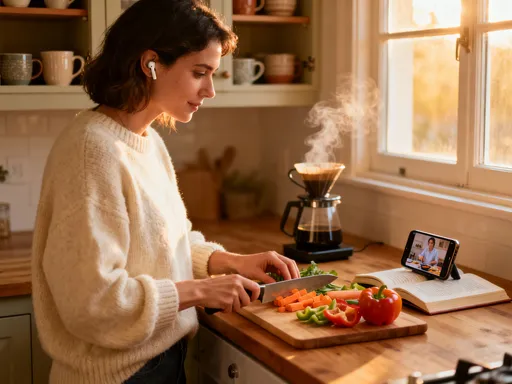
We’ve been taught to think of family connection as something big. A holiday dinner. A reunion. A long phone call on Mother’s Day. But what if intimacy isn’t built in grand moments—but in tiny, repeated ones? I started experimenting. Instead of waiting for the “perfect time,” I began sending quick video call requests. No agenda. No pressure. Just, “Hey, I’m drinking coffee—want to say hi?”
The first few calls were awkward. My brother answered while walking the dog, his phone bouncing with every step. My mom answered in her robe, surprised. “Oh! I wasn’t expecting a call,” she said, adjusting her glasses. But within seconds, we were laughing. I showed her the sunbeam hitting my kitchen table. She showed me the new bird feeder she’d hung. It lasted two minutes. But it felt real.
That’s when I realized: we’ve been chasing perfection in our digital connections. We want the lighting to be good, the background tidy, the kids quiet. We wait until we “have time,” until everything is in place. But real connection doesn’t need perfect conditions—it needs presence. And the more often we showed up, even imperfectly, the more natural it felt. My teenage nephew, who used to groan at family calls, started answering with a grin. “Is this the daily check-in?” he’d say. Frequency didn’t replace deep conversations—it made them easier. Because when you see someone’s face every day, even briefly, you stop feeling like you have to catch up. You’re already caught up.
Think of it like watering a plant. You wouldn’t wait six weeks and then dump a gallon of water on it, hoping it survives. You give it a little each day. That’s what these tiny calls became—small, consistent doses of care. And slowly, the emotional soil began to soften.
Choosing the Right Tool Without Overthinking
When I first decided to try this, I went down a rabbit hole. Which app was best? Should we use Zoom? Google Meet? Some new platform I’d never heard of? I read reviews, compared features, even considered creating a family Slack channel (yes, really). But then I took a step back and asked: what would make this easiest for everyone?
My mom still calls her phone “the computer.” My cousin’s internet cuts out if more than one person is online. My dad still thinks “the cloud” is a weather thing. So I realized: the best tech is the one no one has to learn. The one already on their phone, already signed in, already working.
For us, that was FaceTime. Not because it’s the most advanced, but because it’s simple. One tap. No passwords. No links to click. No “Can you hear me?” delays. If someone has an iPhone, they can join. And for the few who don’t, a quick phone call with video works just as well. I didn’t push for everyone to switch devices. I worked with what we had.
The lesson? Don’t let the tool become the barrier. The goal isn’t to impress with tech—it’s to disappear into the moment. When Grandma can answer with one tap and see her great-grandbaby smiling at her, that’s the win. Not the software. Not the frame rate. Not the features. The feeling.
I remember when my sister-in-law first joined one of our mini-calls. She was nervous. “What do I say?” she asked. I smiled. “Nothing. Just wave. Let the baby show you his new trick.” And that’s what she did. No performance. No pressure. Just a moment. And it was perfect.
Building a Ritual Around Tiny Moments
We didn’t start with deep talks about life and dreams. We started with pancakes. My daughter made them on a Saturday morning, and I said, “Wait—let’s show Grandma!” I opened a video call, and there she was, still in her nightgown, smiling as my daughter proudly flipped a slightly burnt one. “Oh, that’s beautiful!” Grandma said. “Save me a bite!”
That became our thing. No need for a formal “family meeting.” Just sharing what was happening, right now. My brother started sending calls while walking his dog. “Look—this squirrel is judging me,” he’d say, panning the camera. My sister sent a 90-second call showing her first tomato ripening on the vine. “It’s red! After three months!”
These weren’t announcements. They were invitations. Little windows into each other’s days. And the more we did it, the more we began to anticipate them. “Did you see Uncle Mike’s pancake fail?” became a real conversation starter at our next Sunday dinner. We weren’t just sharing updates—we were building a shared rhythm, a sense of “we’re in this together,” even when we were miles apart.
Rituals don’t have to be formal. They don’t need candles or chants. A ritual is simply something you do regularly that carries meaning. And for us, that ritual became the daily “just because” call. No reason. No occasion. Just connection. And it changed how we saw each other—not as distant relatives, but as part of each other’s everyday lives.
How Consistency Changed Our Emotional Availability
About five days into our little experiment, something shifted. My cousin Sarah, who usually kept things light in group chats, answered my call with a tired voice. “I had a rough day,” she said. “Work is overwhelming.” I didn’t jump in with advice. I just said, “I’m here. Want to talk?” And she did.
We sat on our phones for 12 minutes—me on my porch, her in her car in a parking lot. She shared about a project falling apart, about feeling like she wasn’t good enough. And because we’d talked every day that week, it didn’t feel like a heavy “confession.” It felt like a natural part of our connection. She wasn’t performing. I wasn’t fixing. We were just two sisters, being real.
That wouldn’t have happened if we only spoke once a month. The daily calls had built a quiet trust. We’d seen each other’s kitchens, our messy hair, our silly pets. We’d shared small joys. And because of that, the door to share harder things had opened.
My dad, who’s always been quiet, started smiling more during calls. Then, one morning, he said, “You know, I look forward to these.” That simple sentence hit me like a wave. This wasn’t just about staying in touch—it was about feeling seen, felt, and held. The regular eye contact, the real-time reactions, the shared silence when words weren’t needed—these were rebuilding intimacy in a way texts never could.
Emotional availability isn’t something you turn on. It’s something you grow. And we were growing it, one two-minute call at a time.
Overcoming the “It’s Too Much” Mindset
Not everyone was on board at first. My older sister said, “I can’t talk every day. I have work, kids, life.” My uncle replied to my first call with, “Too busy. Call you later.” And I get it. We’re all stretched thin. The idea of “one more thing” on the to-do list feels exhausting.
So I changed the framing. I didn’t say, “Let’s have a daily family call.” I said, “Let’s just say hi. No big talk. No agenda. Just a wave, a smile, a quick ‘thinking of you.’” And I made it clear: two minutes counted. Even one. If you’re brushing your teeth, hold the phone up—let us see you. If the baby is laughing, share it. No pressure. No guilt.
Slowly, resistance melted. My sister started sending calls while waiting to pick up her son from soccer. “Look—sunset over the field!” she’d say. My uncle began answering with a grin. “Just checking in,” he’d say. “You’re not late, you’re early,” I’d tease. And he’d laugh.
The truth is, we make time for what we value. And when something feels light and joyful, it stops being a chore. These calls weren’t draining—they were refueling. A moment of warmth in a busy day. A reminder that we’re not alone. And once people felt that, they didn’t want to miss it.
The Ripple Effect on Family Identity and Memory
After seven days, we’d shared 12 video calls—some with two people, some with five. Nothing fancy. But when I looked back, I realized something beautiful: we’d created a living scrapbook. Not one I had to compile, but one that built itself.
Inside jokes began to form. My nephew started doing a silly dance every time he answered, and now everyone expects it. My mom says “Good morning, sunshine!” to the baby, even if it’s 5 PM. These aren’t forced traditions—they’re organic, born from repetition and affection.
The kids, especially, began to change. My three-year-old started recognizing voices before faces. “That’s Papa!” she’d shout when the call rang. And she began to notice emotions—when Grandma sounded tired, she’d say, “You need a hug?” The elders, too, became more engaged. My aunt, who used to feel “out of the loop,” now shares photos and calls first. “I saw this flower and thought of your garden,” she told my sister.
But the biggest shift? We stopped seeing video calls as a substitute for “real” time together. They became real time. Not a placeholder. Not a compromise. A genuine, meaningful part of our family life. We weren’t just preserving memories—we were making them, in real time, across distances.
And when I think about the future, I don’t worry as much about us growing apart. Because now we have a rhythm. A way to stay close, not despite the distance, but through the small, steady pulse of presence.
So if you’ve been waiting for the perfect moment to reconnect, let me tell you: it’s already here. It’s in the pancake flip, the blooming flower, the tired “I had a rough day.” It’s in the wave, the smile, the “just because” call. You don’t need more time. You don’t need the latest app. You just need to show up—imperfectly, briefly, and with your heart open. Because connection isn’t built in grand gestures. It’s built in moments. And those moments are waiting for you, right now, one tap away.