I kept swiping but felt emptier: How personalization changed my dating journey
We’ve all been there—endless swiping, awkward small talk, and that quiet ache of hoping someone *truly* gets you. I used to dread dating apps, not because I lacked options, but because they felt so impersonal. Then I started noticing how tiny adjustments—like what I shared, who I matched with, and when I engaged—began making a real difference. It wasn’t magic; it was smart personalization. And it didn’t just improve my matches—it helped me understand myself better. What changed wasn’t the app. It was how I used it. And that shift didn’t just bring me closer to others. It brought me closer to who I really am.
The Loneliness Behind the Swipe: When More Choices Feel Like Less Connection
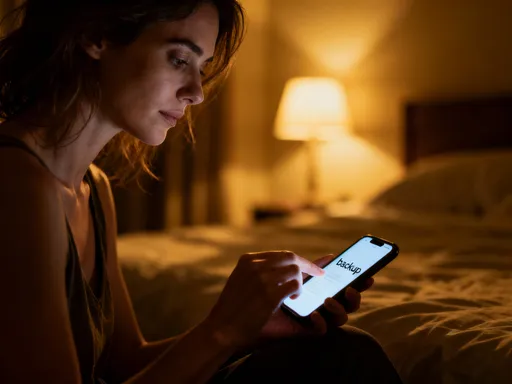
Remember that Sunday afternoon when you sat on the couch, coffee cooling beside you, thumb moving on autopilot? Left, right, left, right—another face, another bio, another profile that looked good but felt... empty. I’ve lost count of how many times I’ve done that. You match. You say “Hey.” They say “Hey back.” And then—silence. Or worse, a string of polite but lifeless messages that go nowhere. It’s not that no one’s interesting. It’s that the whole experience starts to feel like a performance. You’re not connecting. You’re auditioning.
I remember matching with someone who listed “adventures and good coffee” as their passion—just like me. I was excited. We both loved that little café downtown with the mismatched mugs and the barista who remembered your order. But when we started talking, it was all surface. “Nice weather.” “How’s your week?” Nothing stuck. I realized we had the same aesthetic, maybe even the same taste in music, but none of it translated into real chemistry. It hit me then: having things in common isn’t the same as feeling understood.
That’s the quiet struggle so many of us face—especially women in their thirties and beyond. We’re not kids swiping for fun. We’re looking for depth. For someone who sees us, not just our profile picture. But the more options we have, the more exhausted we feel. Psychologists call this the “paradox of choice.” Too many possibilities don’t make us freer—they make us more anxious. We start wondering: *Am I picky? Am I asking too much? Or is it just that no one’s really trying to know me?*
What I didn’t realize then was that the apps themselves were part of the problem. They were built for volume, not meaning. The early versions of dating tech treated everyone the same—same prompts, same swipe mechanics, same one-size-fits-all approach. It didn’t matter if you were a quiet book lover or a weekend hiker. The system didn’t care. And so we learned to shrink ourselves into what we thought would get matches: a smile, a beach photo, a joke about loving tacos and travel. But behind that curated front? We were lonelier than ever.
Beyond Algorithms: How Personalization Puts You Back in Control
Then, something changed. Not overnight, but slowly, I started noticing the app responding to me differently. It wasn’t just showing me people near me or around my age. It was picking up on the kinds of profiles I actually paused on. The ones where someone mentioned volunteering, or had a dog in their photos, or wrote something thoughtful about their family. I wasn’t imagining it—modern platforms use machine learning to observe patterns in how we interact. And when used mindfully, that technology can become a quiet ally in the search for connection.
Think of it like this: every time you linger on a profile, skip a bio, or respond quickly to a message, you’re sending a signal. The app notices. Over time, it starts to build a picture—not of who you *say* you are, but of who you *are* when you’re making choices. If you keep passing on profiles that scream “party life,” but pause every time someone mentions hiking or quiet mornings, the system learns. It doesn’t judge. It adapts. And that subtle shift—from generic to personalized—can completely change your experience.
The key, I’ve learned, is not to fear the algorithm, but to work with it. It’s not about letting a computer choose your soulmate. It’s about giving the tech enough real information so it can reflect your preferences back to you. When I stopped trying to “game” the system—no more forced smiles in sunset photos—and started being honest about what mattered to me, the matches changed. Not because the pool of people changed, but because the filter did. I wasn’t seeing more people. I was seeing *better* people—ones who actually resonated with the life I was living.
This isn’t science fiction. It’s behavioral data being used thoughtfully. Platforms now track engagement patterns, message length, even the time of day you’re most active. If you tend to reply quickly to messages that mention books or cooking, the app may start prioritizing profiles with those interests. It’s not mind reading. It’s pattern recognition. And when you lean into it authentically, it becomes a tool for clarity, not confusion.
Crafting a Profile That Feels Like You—Not a Performance
So how do you start being real—without scaring people off? That was my big question. I didn’t want to overshare, but I also didn’t want to be another smiling face with no story. The breakthrough came when I stopped thinking of my profile as a résumé and started seeing it as a conversation starter. Instead of listing “hiking, coffee, travel,” I asked myself: *What do I actually enjoy? And how can I show that in a way that feels true?*
I changed one photo. Instead of the usual full-face smile, I used a candid shot of me on a rainy Saturday, curled up on the couch with a book, my dog asleep at my feet. No makeup. Hair in a messy bun. And in the caption, I wrote: “Rainy days = blanket forts, true crime podcasts, and second cups of coffee. What’s your perfect slow morning?” That one tweak brought in a different kind of attention. The messages weren’t just “Hey, you’re cute.” They were “I *live* for slow mornings,” or “Blanket forts are underrated—tell me more.” Suddenly, we had something to talk about.
It wasn’t just the photo. It was the invitation. Generic profiles get generic responses. But when you share a specific detail—a book title, a favorite park, a small ritual—it acts like a filter. It quietly says: *If this speaks to you, we might really get along.* One friend changed her bio from “Love to travel” to “Still dreaming about that night in Lisbon when I got lost and ended up at a tiny fado bar with locals singing under string lights.” Guess what? She started matching with people who wanted to talk about travel memories, not just bucket lists.
The lesson? Authenticity isn’t about revealing everything. It’s about revealing *enough*. A single sentence, a genuine photo, a moment of honesty—these are the things that build real connection. And the more you do it, the more the app learns to show you people who appreciate that version of you. It’s not about being perfect. It’s about being present.
When the App Starts to Know You: Small Signals, Big Changes
Have you ever noticed how some apps now ask how you’re feeling before you start swiping? Or suggest conversation starters based on your recent activity? These aren’t gimmicks. They’re part of a quiet evolution in dating tech—one that’s starting to care about your emotional state, not just your location or age.
I’ll never forget the week I was going through a tough time at work. I was tired, emotionally drained, and honestly, not in the mood to talk to anyone. But old me would’ve still opened the app out of habit, forcing myself to engage when I didn’t want to. Then I discovered a feature that lets you set “quiet hours” or signal low energy. When I toggled it on, the app stopped sending notifications. It didn’t push matches. It just... gave me space. And that small act of digital empathy made me feel seen in a way I hadn’t expected.
Other features started showing up too. Personalized icebreakers like “You both follow that author—what’s your favorite book of theirs?” or “Saw you’re into pottery—how’d you get started?” These weren’t random. They were based on actual overlaps the system had noticed. And because they were specific, they felt less like small talk and more like real curiosity. One match responded to a pottery question by sending me a photo of her latest mug—lopsided, glazed unevenly, but full of character. “First one I made,” she wrote. “It leaks, but I love it.” That moment did more to build connection than any generic “What do you do for fun?” ever could.
These tools work because they align with your rhythm. If you’re someone who likes deep talks late at night, the app might suggest more reflective prompts during those hours. If you’re active in the mornings, it might highlight profiles with calm, thoughtful energy. It’s not about changing who you are. It’s about technology adapting to you—so you don’t have to perform to be seen.
From Matches to Meaning: Using Suggestions to Spark Real Conversations
So you’ve got a match. Now what? This is where so many connections die—right after the “Hey.” We fall back into script mode because we don’t know how to go deeper without seeming too intense. But here’s the good news: personalization doesn’t stop at the match. It can guide the conversation too.
I used to panic at this stage. What do I say? Should I compliment their smile? Ask about their job? Both felt stale. Then I started using the app’s suggested prompts—not because I was lazy, but because they were often better than what I could come up with. One match and I had both liked a documentary about ocean conservation. The app suggested: “What part of the ocean do you feel most connected to?” I sent it, half-expecting a one-line answer. Instead, she wrote a beautiful paragraph about snorkeling in Hawaii as a child, seeing a sea turtle for the first time, and how that moment shaped her love for nature. I responded with my own memory—a rocky beach in Maine, tide pools full of tiny crabs, my dad teaching me to look without touching. That exchange led to a 45-minute voice note thread. Two weeks later, we had our first date.
The magic wasn’t in the prompt. It was in the permission it gave us to be vulnerable. Generic questions keep us safe but distant. Personalized ones invite storytelling. And stories—that’s where real connection lives. When someone shares a memory, a fear, a quiet joy, they’re not just answering a question. They’re offering a piece of themselves. And when you respond with your own story, you’re saying: *I see you. I’m here.*
You don’t need fancy tools to do this. But when the technology helps you ask better questions, it removes the friction. It turns “What are you looking for?”—a question that feels like an interview—into “You both love baking—what’s the first thing you ever burned?” That’s not just lighter. It’s more human.
Growing Through the Process: How Dating Tech Can Help You Know Yourself
Here’s something I didn’t expect: the more I used personalization to find better matches, the more I learned about myself. It wasn’t just about who I was attracted to. It was about *why*. I started paying attention to who I swiped right on—and who I ghosted after a few messages. What did they have in common? What made me lose interest?
I noticed I kept matching with people who seemed kind, but I’d disengage if they didn’t show curiosity. That told me something: I value emotional availability more than I realized. I also found myself drawn to profiles with a sense of humor—especially self-deprecating jokes. That made me laugh, but it also made me reflect: maybe I’m more drawn to people who don’t take themselves too seriously, because I sometimes do.
I started journaling about my app use. Not every day. Just a few notes: “Felt hopeful after that chat.” “Felt drained—maybe I’m comparing myself again.” “Liked how they asked about my sister. That mattered.” Over time, these reflections became a mirror. They showed me my emotional patterns, my insecurities, and my quiet longings. I wasn’t just looking for love. I was learning how I love. And how I want to be loved.
Dating apps, at their best, aren’t just matchmakers. They’re self-awareness tools. Every interaction is data—not just for the algorithm, but for you. Who do you block? Who do you unfavorite? What makes you light up? These are clues to your values. And when you pay attention, the journey becomes as meaningful as the destination.
Dating on Your Terms: Building Independence, One Personalized Step at a Time
I’ll be honest: I’m not in a relationship right now. But I’m not lonely. That might sound strange, but it’s true. Because what personalization taught me wasn’t just how to find the right person. It taught me how to be the right person—for myself.
When you stop trying to fit into what you think will get attention and start showing up as you are, something shifts. You attract fewer matches, maybe. But they’re the kind who appreciate your quiet mornings, your dog’s goofy grin, your love of bad reality TV. And even if none of them become “the one,” you’re no longer measuring your worth by who swipes right. You’re measuring it by how true you’re being.
Technology didn’t fix my love life. But it helped me stop outsourcing my happiness. Every personalized choice—what I share, who I engage with, when I log off—became an act of self-respect. I’m not waiting for someone to complete me. I’m building a life I love, with or without a partner. And that, more than any match, has brought me peace.
So if you’re tired of swiping, if you’re tired of feeling unseen, I get it. But don’t give up on the process. Just change how you’re using it. Let the tech work for you, not against you. Share what matters. Pay attention to what resonates. Honor your rhythm. Because the best relationship you’ll ever have is the one with yourself. And when you’re grounded there, love doesn’t feel like a rescue. It feels like a choice. A joyful, intentional, deeply personal one.