Why Passive Income Dreams Fail: My Trend Trap Confession
I once believed passive income was my golden ticket—set it and forget it, right? Wrong. I jumped into trendy schemes without seeing the warning signs. What looked like a wave to ride turned into a trap. This is my real talk on chasing trends, the hard lessons learned, and how misjudging the market nearly cost me everything. Let’s break down what really works—and what doesn’t. Behind every alluring promise of financial freedom lies a hidden cost: the price of poor judgment, emotional decisions, and the belief that everyone else must know something you don’t. This story isn’t about overnight riches. It’s about waking up from the dream before the debt settles in.
The Allure of "Set-and-Forget" Wealth
The idea of passive income has become one of the most seductive narratives in modern personal finance. It speaks directly to a universal desire: freedom from the clock, escape from the paycheck-to-paycheck grind, and the ability to live on your own terms. Advertisements, social media influencers, and online courses paint a picture of serene mornings sipping coffee while money flows in from automated systems. The message is clear: work once, earn forever. But this narrative, while emotionally powerful, often omits a crucial truth—true passive income is neither instant nor effortless. It is the result of careful planning, sustained effort, and often, significant upfront investment.
What makes this dream so compelling is not just the promise of money, but the promise of time. For many, especially those balancing family responsibilities, household management, and personal well-being, time is the most valuable currency. The thought of reclaiming hours lost to routine labor—commuting, meetings, endless chores—feels revolutionary. This emotional appeal is amplified by platforms that curate success stories, often highlighting outliers as if they were the norm. A single viral post about someone earning thousands from a side hustle can ignite a wave of imitation, even when the full context is missing. The result is a culture that glorifies quick wins while downplaying the years of preparation, failure, and refinement that precede real success.
Moreover, the language around passive income has been deliberately softened to sound accessible. Phrases like "easy money," "no experience needed," and "start today" lower psychological barriers to entry. But these slogans often mask complex realities. What begins as a simple online course or app-based investment can quickly evolve into a time-consuming, emotionally draining project. The danger lies in mistaking convenience for sustainability. Just because a system is easy to start does not mean it is easy to maintain—or profitable. The fantasy of "set it and forget it" thrives on omission: it rarely mentions customer service demands, platform fees, algorithm changes, or market saturation. By selling simplicity, it encourages action without awareness, setting the stage for disappointment.
Riding the Hype Wave: When Trends Feel Like Truth
One of the most common pitfalls in the pursuit of passive income is the instinct to follow trends. When a new opportunity gains momentum—whether it’s a digital asset, a subscription model, or a rental platform—it’s easy to interpret popularity as proof of potential. After all, if so many people are jumping in, it must be a good idea, right? This line of thinking, while natural, is deeply flawed. Popularity does not equal profitability. In fact, by the time a trend reaches mainstream attention, much of its early advantage has already been captured by those who entered earlier. What remains is often a crowded, competitive space where returns diminish rapidly.
The psychology behind trend-chasing is rooted in two powerful cognitive biases: confirmation bias and herd mentality. Confirmation bias leads people to seek out information that supports their desire to believe in a lucrative opportunity, while ignoring warning signs. Herd mentality amplifies this effect—when others act, we feel pressure to act too, driven by fear of missing out. Social proof becomes a substitute for due diligence. A single testimonial or viral post can feel more convincing than months of market research. This emotional momentum can override rational analysis, especially when financial stress or life transitions heighten the need for change.
Consider the rise of certain online platforms that promised easy earnings through content creation or digital product sales. At their peak, they attracted millions of users, each hoping to capitalize on the platform’s growth. But as the user base expanded, competition intensified. Algorithms changed, favoring established creators or paid promotions. What once required minimal effort now demanded constant optimization, marketing, and adaptation. Many who entered late found themselves investing more time and money than they earned, trapped in a system they no longer controlled. The trend had become the product—sold not for its long-term value, but for the illusion of immediate access to wealth.
Another danger of trend reliance is timing. Markets move in cycles, and what appears to be a growing opportunity may already be peaking. Without understanding the underlying drivers—such as consumer behavior, regulatory environment, or technological feasibility—it’s impossible to judge sustainability. Trend judgment often replaces real research, leading investors to confuse short-term momentum with long-term viability. The result is a pattern of jumping from one "next big thing" to another, rarely staying long enough to build meaningful returns. True financial progress, however, comes not from chasing waves, but from understanding when to step back and assess whether the tide is coming in or going out.
The Hidden Costs Behind "Passive" Systems
The word "passive" is perhaps the most misleading term in personal finance. It suggests minimal involvement, but in reality, most so-called passive income streams require ongoing attention, maintenance, and adaptation. The myth of hands-off earnings overlooks the hidden costs that erode profits and drain energy. These are not always financial—though fees, taxes, and unexpected expenses are common—but often involve time, emotional labor, and opportunity cost. A system that demands constant troubleshooting, customer inquiries, or content updates is not passive, even if it generates income.
Take, for example, the case of online rental platforms. On the surface, renting out a spare room or vacation property appears to be a straightforward way to earn extra income. Automated booking systems, digital payments, and review management create the illusion of ease. But behind the scenes, hosts face a range of responsibilities: cleaning, maintenance, guest communication, compliance with local regulations, and dealing with last-minute cancellations. What begins as a weekend project can quickly consume evenings and holidays. When demand drops or competition increases, hosts may need to lower prices, invest in upgrades, or expand to multiple properties—each adding complexity. The "passive" stream becomes a part-time job, with income that barely offsets the effort.
Similarly, digital content platforms promise creators the ability to monetize their skills with minimal overhead. But success often depends on factors outside individual control: algorithm changes, platform policies, and shifting audience preferences. A video or blog post that once generated steady ad revenue may suddenly lose visibility, requiring constant re-optimization. Affiliate marketing, another popular model, relies on traffic and trust. Building an audience takes time, and maintaining it requires consistency. When earnings depend on external platforms, creators are vulnerable to sudden changes—such as demonetization or policy updates—that can wipe out income overnight. The cost is not just financial, but emotional: the stress of unpredictability, the pressure to perform, and the erosion of creative joy.
Then there are the less visible but equally damaging costs: opportunity cost and sunk investment. Time spent managing a failing side hustle is time not spent on higher-return activities, personal development, or family. Capital tied up in underperforming assets could have been allocated elsewhere. Many people overlook these trade-offs until they’re deep into a project, only to realize they’ve invested more than they can afford to lose. The lesson is clear: no income stream is truly passive. Each carries its own set of demands. Recognizing these hidden costs is the first step toward making informed decisions about where to invest time and money.
Misreading the Market: A Closer Look at Failed Bets
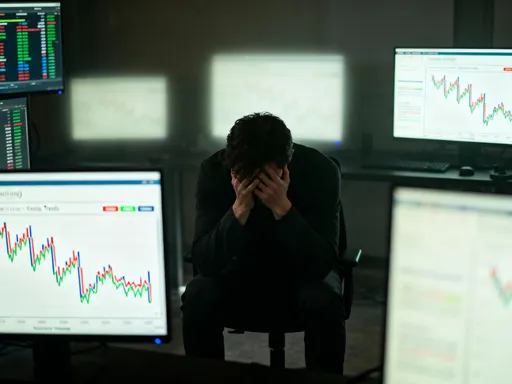
Every financial mistake tells a story, and mine began with a simple misjudgment: I assumed that because something was popular, it was profitable. I invested in a niche that was trending online—selling digital templates through a third-party marketplace. The initial sales were encouraging, and early testimonials suggested high demand. I scaled quickly, creating more designs, paying for promotions, and even hiring a freelancer to help with customer support. For a few months, it felt like momentum was on my side. Then, almost overnight, sales dropped. The marketplace updated its algorithm, favoring established sellers and paid advertising. New listings received little visibility. My return on investment plummeted, and I was left with a product line that no longer moved.
This experience was not unique. It followed a pattern seen across many trend-driven opportunities: overvalued niches, poor timing, and emotional decision-making. The niche I entered had become saturated, with thousands of similar offerings. Price competition drove margins down, and differentiation became nearly impossible. I had mistaken early popularity for lasting demand, failing to ask whether the market could sustain so many players. Worse, I had not built an independent audience or distribution channel. My entire business depended on a single platform, making me vulnerable to changes beyond my control. When the rules shifted, I had no leverage.
Another common failure pattern is the pursuit of "hot" digital assets without understanding their underlying value. Some investors flock to emerging platforms or tokens based on hype, assuming that growth will continue indefinitely. But without utility, clear ownership rights, or regulatory clarity, many of these assets lack long-term foundations. When sentiment shifts, liquidity dries up, and early adopters exit, latecomers are left holding depreciating assets. The difference between a fad and a sustainable model often comes down to one question: does this solve a real problem, or is it simply entertaining?
Emotional decision-making plays a major role in these missteps. Fear of missing out, excitement over quick wins, and the desire to validate one’s effort can cloud judgment. People often double down on failing investments, hoping to recoup losses, rather than cutting ties early. They ignore warning signs—declining engagement, rising competition, changing policies—because admitting failure feels like personal defeat. But financial resilience isn’t about being right all the time. It’s about recognizing when a strategy isn’t working and having the discipline to pivot. The most valuable skill in investing isn’t prediction—it’s pattern recognition. Learning to spot fragile opportunities before they collapse is what separates sustainable success from fleeting hype.
Risk Control: Building Filters Before You Invest
After my setbacks, I realized that the real issue wasn’t the opportunities themselves, but my approach to evaluating them. I had acted on emotion, not analysis. I had trusted marketing over metrics. I had assumed that popularity equaled potential. To rebuild, I needed a system—a set of filters to separate viable opportunities from dangerous distractions. The first and most important rule: if it sounds too good to be true, it probably is. Extraordinary claims require extraordinary evidence. Promises of high returns with little effort, guaranteed income, or secret strategies should raise immediate red flags. Transparency matters. If the business model is unclear, if fees are hidden, or if success stories lack verifiable data, proceed with extreme caution.
Another critical filter is sustainability. Instead of asking "Can I make money from this?" I now ask "Can this continue to make money over time?" This shifts the focus from short-term gains to long-term viability. I look for models with recurring value—products or services people need regularly, not just once. I assess whether the opportunity depends on a single platform or algorithm, or whether it allows for independent growth. Diversification is also key. Putting all resources into one trend is risky. Spreading investments across different income streams reduces exposure to any single point of failure. Even within a single project, I build in exit options—ways to scale down, pivot, or liquidate without total loss.
Testing small before scaling is another essential practice. Instead of committing time and capital upfront, I start with minimal viable experiments. For example, before launching a full product line, I test demand with a single offering. Before investing in equipment or inventory, I validate interest through pre-orders or surveys. This approach minimizes risk and provides real data to guide decisions. It also builds confidence—not in the trend, but in the process. Emotional boundaries are equally important. I set clear limits on how much time and money I’m willing to invest, and I stick to them. This prevents overcommitment and reduces the pressure to justify sunk costs.
Finally, I prioritize control. The more control I have over the system—the platform, the audience, the pricing—the more resilient it becomes. Relying on third-party ecosystems is convenient, but it comes with inherent risks. Building my own audience through email lists, social media followings, or direct sales channels gives me leverage. If one platform fails, I can adapt. If rules change, I’m not powerless. Risk control isn’t about avoiding all danger—it’s about managing exposure. By applying these filters, I’ve shifted from chasing trends to building foundations.
What Actually Works: Sustainable Income Frameworks
After years of trial, error, and reflection, I’ve found that the most reliable income streams share common traits: they are based on real value, they solve ongoing problems, and they grow through consistency, not hype. One of the most proven models is dividend-focused investing. Unlike speculative assets, dividend-paying stocks represent ownership in companies with established revenue, profits, and a history of returning value to shareholders. While returns are modest compared to viral trends, they are predictable and compound over time. Reinvesting dividends builds wealth gradually, without requiring constant attention. The key is patience and diversification—spreading investments across sectors to reduce volatility.
Another sustainable model is content ownership. Instead of relying on third-party platforms, I now focus on building assets I control: a personal website, an email list, and digital products sold directly to customers. This allows me to retain full ownership of my audience and profits. While it takes longer to gain traction, the long-term benefits are significant. I’m not subject to algorithm changes or policy shifts. I can communicate directly with my audience, build trust, and offer tailored solutions. Over time, this creates a loyal customer base that supports recurring sales.
Skill monetization is another reliable path. Whether through consulting, teaching, or creating tools, turning expertise into income provides both financial return and personal fulfillment. Unlike trend-based gigs, skills appreciate with experience. The more I refine my knowledge, the more valuable it becomes. This model also allows for scalability—once a course or template is created, it can be sold repeatedly with minimal additional effort. But even here, success depends on continuous improvement, not passive delivery.
What unites these models is their foundation in value creation, not speculation. They don’t promise overnight riches, but they offer something more valuable: stability, control, and long-term growth. They require effort, but the effort is directed toward building something lasting, not chasing something fleeting. In a world obsessed with shortcuts, these frameworks remind us that real wealth is grown, not grabbed.
From Failure to Foundation: My Real Strategy Now
Today, my approach to passive income is fundamentally different. I no longer chase trends or respond to urgency. Instead, I focus on building systems that align with my values, skills, and long-term goals. I invest in opportunities that offer transparency, sustainability, and control. I accept that progress is slow, but I trust the process. My income streams are diversified—some generate steady returns, others provide growth potential, and all are designed to withstand market shifts. I still make mistakes, but I catch them earlier, thanks to the filters I’ve put in place.
The biggest change, however, is in mindset. I no longer see passive income as a ticket to freedom. I see it as a result of disciplined choices made over time. Real financial resilience comes not from shortcuts, but from consistent effort, informed decisions, and the courage to walk away from what doesn’t work. My journey has taught me that failure is not the opposite of success—it’s part of it. Every misstep revealed a blind spot, every loss taught a lesson. The dream of effortless wealth may have led me astray, but the lessons I’ve learned have grounded me.
For anyone considering passive income, my advice is simple: start with awareness, not action. Understand the difference between hype and substance. Ask hard questions before investing a single dollar. Build slowly, test thoroughly, and prioritize control over convenience. True freedom isn’t found in escaping work—it’s found in doing work that matters, on your own terms. The path may be longer, but it’s the only one that leads somewhere real.